Why Door Canvassing Matters
The most effective way to get people to the polls is not a television advertisement, a mail piece, a social media post, or a phone bank. It is a face-to-face conversation at a voter's front door.
The evidence suggests that personal contact remains the gold standard of voter mobilization because it creates a human connection, builds trust, and allows campaigns to understand what voters actually care about.
Many first-time candidates assume that winning campaigns are built primarily through fundraising, advertising, and campaign messaging. The research suggests a different reality.
Why Face-to-Face Conversations Work
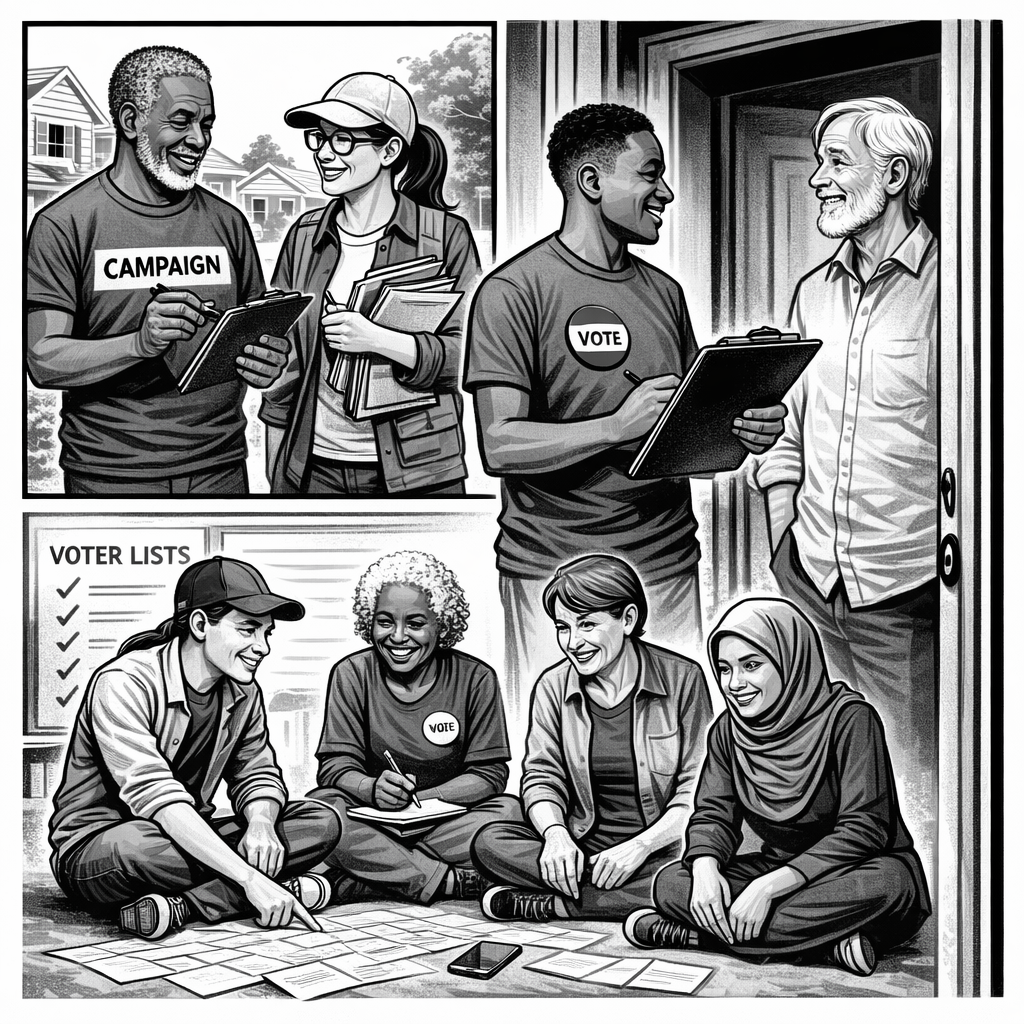
The Yale voter mobilization experiments found that face-to-face canvassing was one of the most effective methods of increasing voter turnout, producing substantially stronger results than impersonal communication methods such as automated calls and many forms of direct outreach.
The Brookings discussion highlighted a consistent theme across dozens of studies: personal contact motivates people because they feel invited into the democratic process rather than merely reminded that an election exists.
What often changes behavior is the feeling that someone cared enough to have a conversation. A brief conversation at the front door creates recognition, trust, accountability, and personal investment.
What Candidates Learn at the Door
Door canvassing is not simply about delivering a campaign message. It is about discovering the message.
Over time, these conversations reveal what voters actually care about rather than what campaign consultants assume they care about. The campaign message becomes rooted in lived experience.
When candidates spend time at the doors, they begin hearing recurring themes:
- Concerns about schools
- Housing affordability
- Public safety
- Transportation
- Local government responsiveness
- Community identity
The Practical Side of Running a Successful Canvass
Research alone is not enough. A successful canvass requires organization and discipline.
Recruit volunteers from friends, neighbors, community organizations, and supporters, then assign clear roles such as canvass coordinator, volunteer coordinator, trainer, and logistics coordinator.
Choose walkable neighborhoods, dense housing areas, and locations where many conversations can occur in a short period of time because efficiency increases both learning opportunities and turnout impact.
Every canvasser should have a walk list, script, campaign literature, water, and comfortable shoes. Most importantly, campaigns should record the outcome of every conversation.
Train for Conversations, Not Speeches
The guide encourages volunteers to follow the script while also speaking from the heart. Personal stories and authentic conversations are often more persuasive than memorized talking points.
Candidates should enter each conversation with curiosity. Ask questions. Listen carefully. Take notes. Look for patterns. The goal is not to win an argument. The goal is to understand the community.
The Candidate Advantage
Perhaps the most overlooked benefit of door canvassing is leadership development.
By Election Day, that candidate has heard most of the concerns that will appear during debates, town halls, and community forums. The campaign becomes stronger because the candidate becomes stronger.
A candidate who has spoken with 1,000 voters has already practiced:
- Active listening
- Handling criticism
- Answering difficult questions
- Finding common ground
- Building rapport
How Winning Campaigns Apply This
Winning campaigns do not treat canvassing as a stand-alone contact tactic. They use it to learn what resonates, identify which voters respond to which messengers, and then shape volunteer deployment, outreach sequencing, and turnout operations around those patterns.
How BRB Campaigns Supports This
BRB Campaigns helps teams move from relationship strategy into execution through the Strategic List Builder, walk-list creation, canvassing assignments, volunteer coordination, and structured note capture after every voter conversation.
Related BRB workflow: Strategic List Builder, canvassing packets, volunteer coordination, and voter conversation tracking
Key Takeaways
- Personal contact remains more influential than impersonal voter outreach because it creates trust and a sense of recognition.
- Door canvassing helps campaigns discover what voters actually care about, which improves message development and community alignment.
- Strong canvass programs depend on disciplined team roles, good neighborhood selection, prepared materials, authentic volunteer conversations, and reliable data capture.