Why Door Canvassing Still Wins Elections
Door canvassing is a leadership development exercise that teaches how to listen, build trust, navigate disagreement, and shape a campaign message that reflects the lived experiences of voters rather than the advertisements storming the airwaves.
The most important insight from door canvassing is that the voter is speaking from a place of ownership: at their front door, and that changes the nature of the interaction.
Trust, rapport, and listening must come before problem-solving. A voter rarely changes their mind because of a perfectly crafted talking point. Effective canvassing works like: Voter > Conversation > Candidate Learning > Campaign Message.
Building rapport is the primary goal and understanding facts is secondary. That means rapport-building is more important than chronology or information gathering.
The Yale field experiment described the turnout effect of door canvassing as striking given the minimal nature of the interaction. That turnout may increase not simply because a message was delivered, but because a human relationship was briefly established.
A poor canvasser arrives with answers. A great canvasser arrives with curiosity. When a voter expresses anger about schools, housing, taxes, public safety, or government, the disagreement itself is valuable information because the voter is revealing what matters.
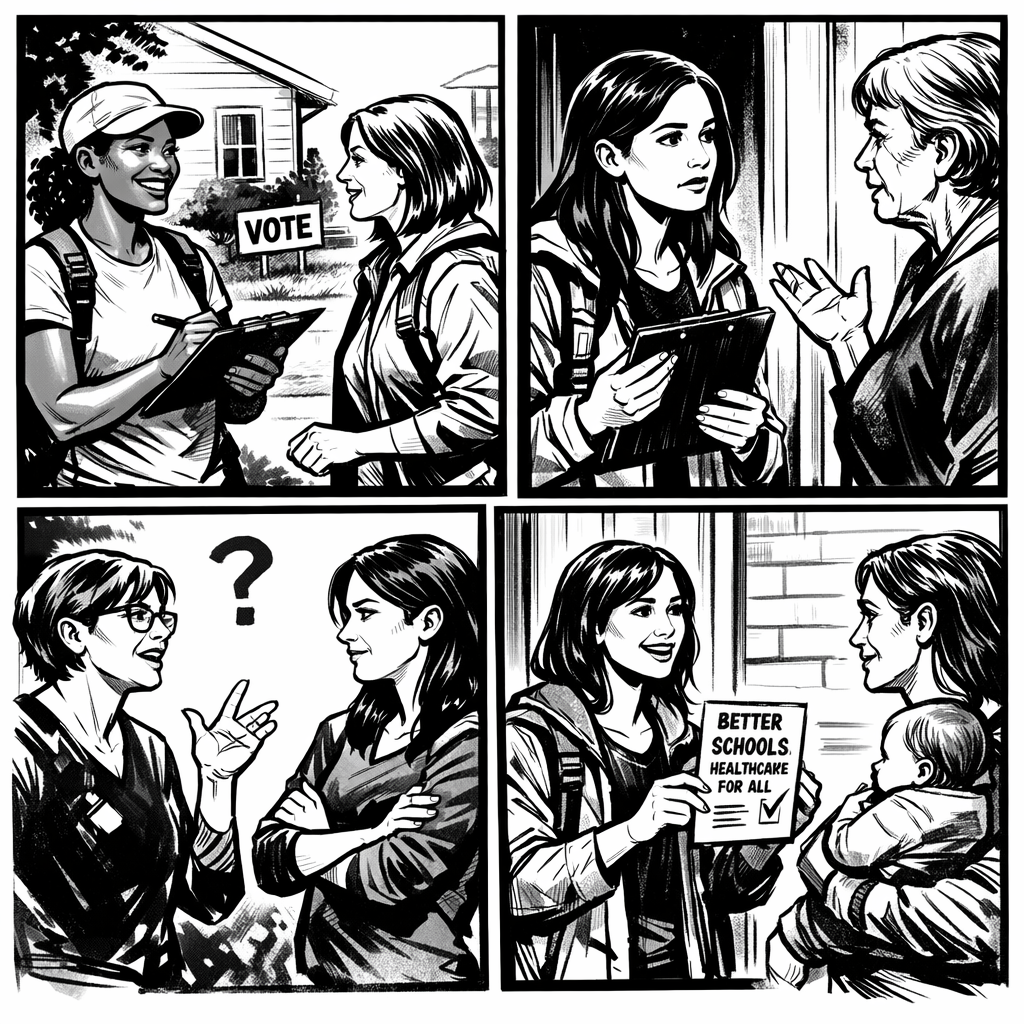
The Best Campaign Messages Are Discovered
Controlling the narrative is about framing reality. The strongest narratives emerge when leaders understand how people are already experiencing an issue and then communicate within that framework.
Those same observations become the foundation of a campaign narrative. The campaign message becomes: What are voters already trying to tell us?
Building Trust
The candidate who has listened to 1,000 voters has already heard most of the difficult questions they will encounter.
They notice patterns: Common frustrations. Shared aspirations and Emotional themes. People must feel understood before they become willing to solve problems together. Good listening establishes trust, creates impartiality, and lays the groundwork for letting go of anger and exchanging ideas.
Door canvassing teaches us:
- Emotional regulation.
- Active listening.
- Handling disagreement.
- Remaining calm under criticism.
- Responding without becoming defensive.
People become open to a candidate because they trust the candidate. Trust precedes persuasion. Relationship precedes agreement. Listening precedes influence.
The greatest value of door canvassing is not that it helps candidates deliver a message. The greatest value is that it teaches candidates how to discover the message.
How Winning Campaigns Apply This
Winning local campaigns use canvassing to gather patterns, not just tally contacts. They brief volunteers to listen closely, capture what voters care about, and route those lessons back into candidate preparation, neighborhood priorities, and message refinement before the next round of outreach.
How BRB Campaigns Supports This
BRB Campaigns helps teams turn listening into operations by organizing target universes, assigning walk lists, recording conversation notes, and keeping follow-up tied to what voters actually said at the door.
Related BRB workflow: Door canvassing packets, volunteer assignments, and voter conversation tracking
Key Takeaways
- At the front door, voters speak from a place of ownership, which changes canvassing from message delivery into trust-building and listening.
- The strongest campaign messages are often discovered through repeated voter conversations rather than created in isolation by the campaign.
- Door canvassing develops emotional regulation, curiosity, and trust-building skills that make candidates stronger communicators and leaders.