Door Canvassing Wins Local Elections
Local elections are different.
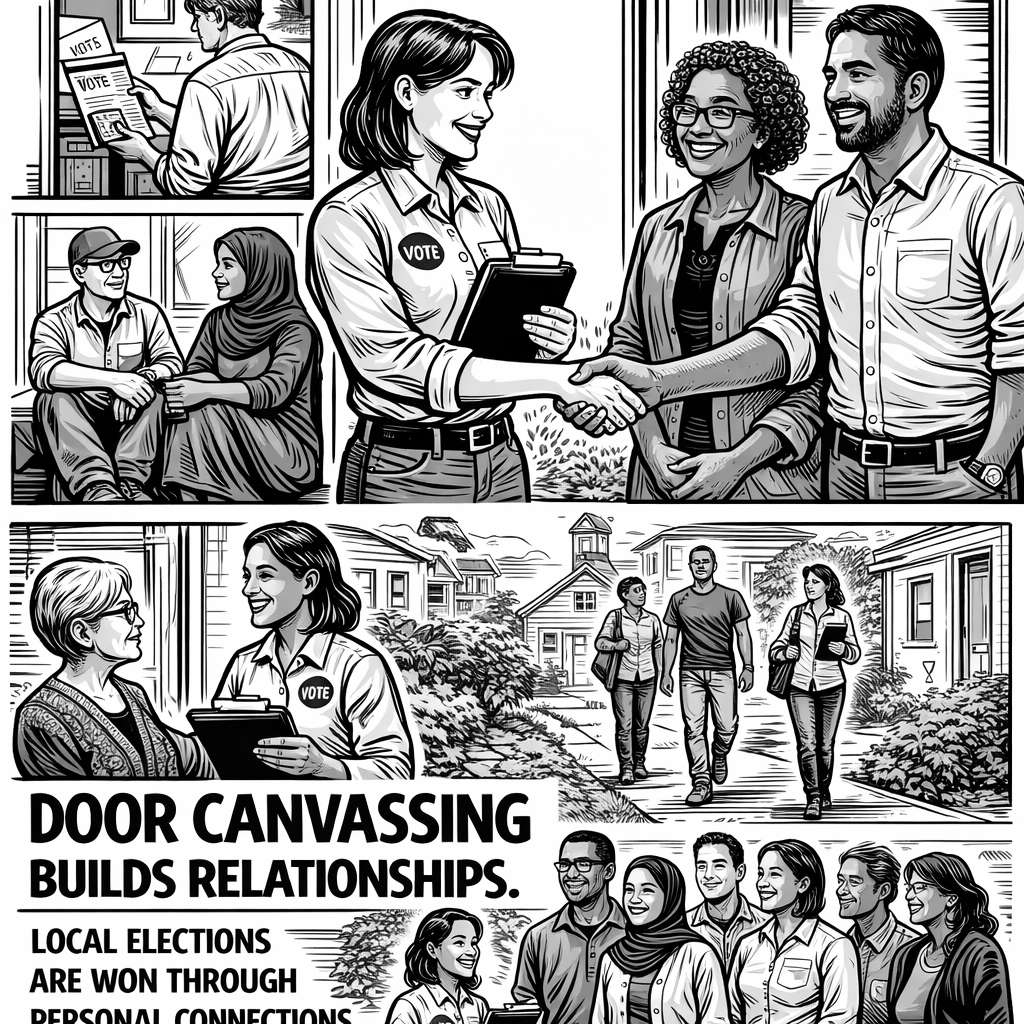
School board, City Council and County races are often decided by a relatively small number of voters. While the decisions made by local officials affect students, families, teachers, taxpayers, and the future of the community, voter participation is typically much lower than in state or national elections. This creates a unique opportunity for candidates who are willing to engage directly with voters.
Research conducted across six local elections found that face-to-face voter contact consistently increased turnout. Voters who received a personal visit from a canvasser were significantly more likely to vote than those who received no contact. The positive effect appeared across different cities, different demographics, and different types of local elections. The conclusion was clear: personal conversations motivate people to participate.
For a candidate, this finding is important because local elections are often won through relationships rather than advertising.
Door Canvassing Creates Trust
Unlike national races, there are usually no televised debates, major media campaigns, or large advertising budgets. Voters are often choosing between names they barely recognize. Door canvassing changes that dynamic. A conversation at the front door allows voters to meet the candidate, ask questions, share concerns, and evaluate character. It transforms a candidate from a name on a ballot into a real person who is invested in the future of local schools. Trust is difficult to build through mailers and social media alone. Trust grows through conversation.
The Door Is Where Campaign Learning Happens
Many first-time candidates approach canvassing as a way to deliver their message. The most successful candidates approach canvassing as an opportunity to learn. Parents, grandparents, teachers, and community members often have valuable insights about school safety, academic achievement, facilities, budgeting, student support services, and district leadership. These conversations help candidates understand what matters most to voters and refine their priorities accordingly.
The best campaigns are built from the community outward, not from campaign headquarters inward.
Every Other Campaign Activity Supports the Door Program
Signs build visibility. Mailers reinforce recognition. Digital advertising increases awareness. Community events create exposure. But door canvassing creates connection.
The strongest local campaigns treat door conversations as the center of the campaign and use every other activity to support those conversations. Voters may first meet the candidate at their door, then visit the campaign website, attend a community event, receive a flyer, or see a yard sign. Each interaction reinforces the relationship that began through personal contact.
Door Canvassing Builds Volunteers and Community Support
A campaign does not grow through advertising alone. It grows through people. At the door, candidates discover supporters who may become volunteers, hosts for neighborhood gatherings, advocates among parents, and trusted voices within the community. These relationships create momentum that extends far beyond a single conversation. Support spreads through networks of trust.
Campaign Like You Intend to Govern
Effective school board members are expected to listen, understand community concerns, communicate openly, and represent the interests of students and families. Door canvassing develops those same skills. Candidates who spend months listening to residents enter office with a stronger understanding of the district, deeper community relationships, and a clearer sense of the challenges facing local schools. The campaign itself becomes preparation for leadership.
The Front Door Is Different
The research found that face-to-face contact consistently increased participation because personal conversations matter. In local elections, where turnout is often low and margins can be narrow, those conversations can be decisive. Winning a school board election is not simply about delivering a message. It is about earning trust. The most successful candidates are often the ones who spend the most time listening, learning, and building relationships with the people they hope to represent.
That work begins at the front door.
How Winning Campaigns Apply This
Winning local campaigns put door canvassing at the center of the field plan, train volunteers to listen as well as persuade, and make every later contact reinforce the relationship built at the doorstep.
How BRB Campaigns Supports This
brb Campaigns helps teams organize walk lists, record voter concerns, identify supporters and volunteers, and connect each door conversation to the follow-up work that turns trust into turnout.
Related BRB workflow: Door canvassing, voter learning, supporter follow-up, and turnout execution
Key Takeaways
- Face-to-face canvassing increased turnout across multiple local elections, cities, and voter groups, reinforcing its value as a durable turnout tactic.
- Local campaigns benefit disproportionately from door canvassing because many voters begin with little information and rely on direct contact to evaluate candidates.
- The best local campaigns treat canvassing as both a turnout tool and a learning system that strengthens message, volunteer recruitment, and community credibility.