House Parties Win Neighborhoods
Many first-time candidates view house parties as fundraising events or opportunities to deliver a campaign speech. Research suggests they are something much more important.
House parties are one of the most effective ways to build the relationships, trust, volunteer networks, and community engagement that drive voter turnout and campaign success.
While television ads, social media posts, direct mail, and campaign literature can introduce a candidate to voters, political science research consistently finds that personal contact remains one of the most powerful ways to influence participation in elections. Voters are more likely to engage when outreach comes from people they know, trust, and see as part of their community.
This is why house parties matter.
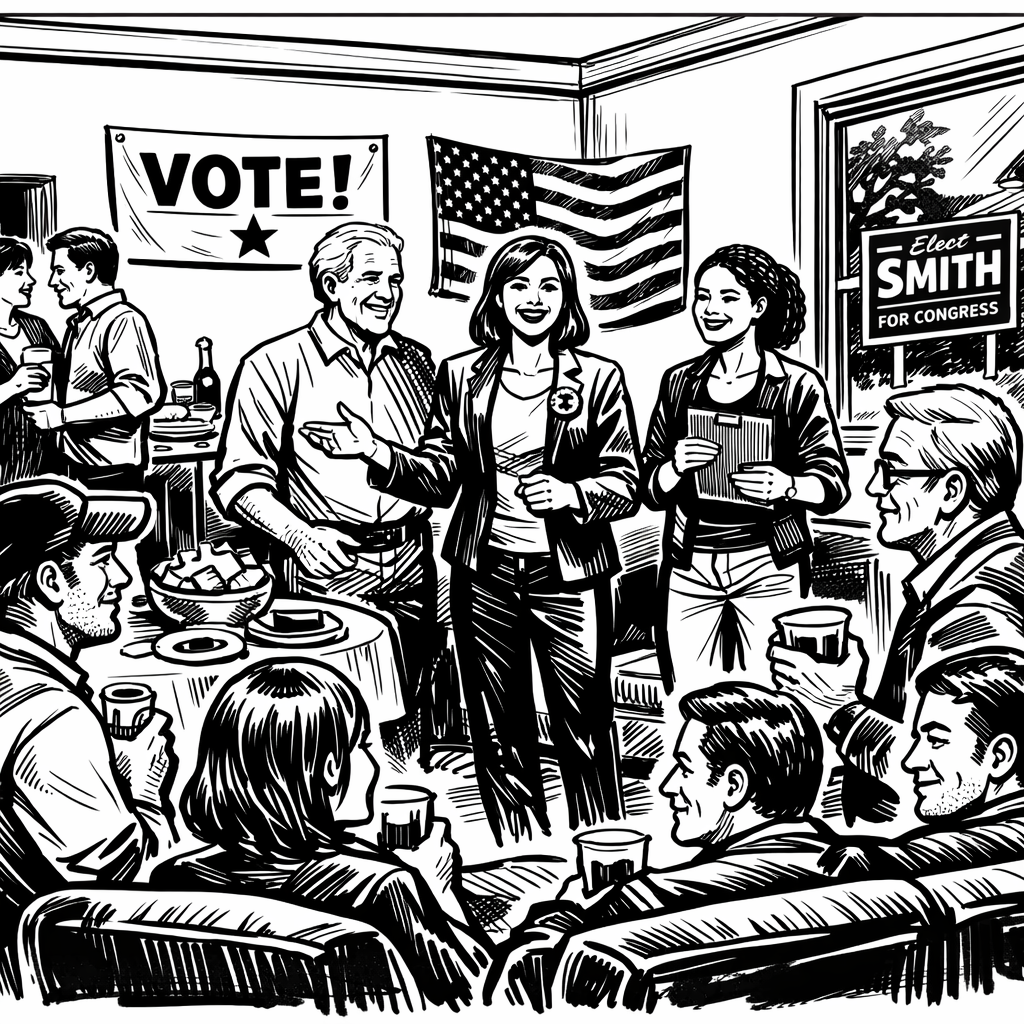
Bringing the Candidate Into the Neighborhood
A successful house party begins with a committed supporter. This supporter is already a strong advocate for the campaign. They have likely displayed a yard sign. They have spoken positively about the candidate to neighbors. They intend to vote. Most importantly, they possess something no campaign can purchase: trust.
When neighbors receive an invitation from someone they already know, the campaign enters the conversation through an existing relationship. Instead of asking, "Will you listen to this candidate?" the invitation asks, "Will you join your neighbors for a conversation?" This subtle difference changes everything.
Building Volunteers Before Building Voters
Candidates often focus on persuading voters. The strongest campaigns focus on developing volunteers.
Every attendee at a house party represents multiple opportunities:
- A future volunteer.
- A future canvasser.
- A future donor.
- A future event host.
- A future neighborhood leader.
The purpose of a house party is not simply to communicate a campaign message. The purpose is to identify people willing to help carry that message throughout the community. One volunteer can knock on doors. Ten volunteers can cover a neighborhood. One neighborhood leader can recruit ten more volunteers. This is how campaigns scale.
House Parties Create Community Ownership
One of the most overlooked benefits of house parties is that they create shared ownership of the campaign.
The campaign becomes: "Our campaign." Neighbors begin introducing neighbors. Volunteers begin recruiting volunteers. Supporters begin hosting additional events. The campaign becomes embedded within the social fabric of the community. This is exactly the type of community-based organizing that political scientists have found to be highly effective at increasing participation and turnout.
Winning the Neighborhood
The most successful campaigns do not stop after one event. They use each house party to generate the next house party. Each neighborhood develops its own volunteer leaders. Each leader develops their own network. Each network expands the campaign's reach.
A successful house party should have clear goals:
- Introduce the candidate.
- Listen to community concerns.
- Identify supporters.
- Recruit volunteers.
- Recruit future hosts.
- Build neighborhood relationships.
The result is a self-reinforcing cycle: Supporter -> Hosts House Party -> Recruits Volunteers -> Volunteers Canvass Neighborhood -> More Supporters Identified -> New House Parties Created -> Increased Voter Turnout.
The Strategic Takeaway
The greatest value of a house party is not the number of people who attend. The greatest value is the relationships that are created afterward. House parties transform supporters into organizers. Organizers recruit volunteers. Volunteers conduct canvassing, voter identification, and GOTV operations.
Those personal conversations create the trust and social connection that political science research consistently identifies as the foundation of successful voter mobilization. Candidates often ask how they can win a neighborhood. The answer is not found in a mail piece, a social media advertisement, or a campaign slogan. It is found in a living room filled with neighbors who trust one another enough to begin working together.
How Winning Campaigns Apply This
Winning campaigns use house parties to transfer trust from committed supporters to new neighbors, identify the people most ready to lead, and convert each event into the next round of volunteer recruitment and neighborhood outreach.
How BRB Campaigns Supports This
brb Campaigns helps teams organize supporter networks, recruit volunteers, track future hosts, and connect neighborhood events to follow-up canvassing and turnout execution so house parties become part of a larger field system.
Related BRB workflow: House party organizing, volunteer recruitment, neighborhood leadership, and turnout follow-up
Key Takeaways
- House parties work because invitations arrive through trusted local relationships instead of impersonal campaign contact.
- The best house parties recruit future volunteers, hosts, and neighborhood leaders rather than treating attendance as the final objective.
- Campaigns scale when each neighborhood event generates new organizers who can recruit, host, and expand the next layer of voter contact.