Voter ID is Change Leadership
Many first-time candidates think of voter identification as a database exercise. A volunteer knocks on a door, the voter is marked from strong supporter to opposed, the data is entered, and the campaign moves on. But the most successful campaigns understand that voter identification is much more than data collection. It is change management. Every voter who ultimately casts a ballot for your campaign must move through a process of change. They must move from uncertainty to confidence, from awareness to commitment, and from interest to action.
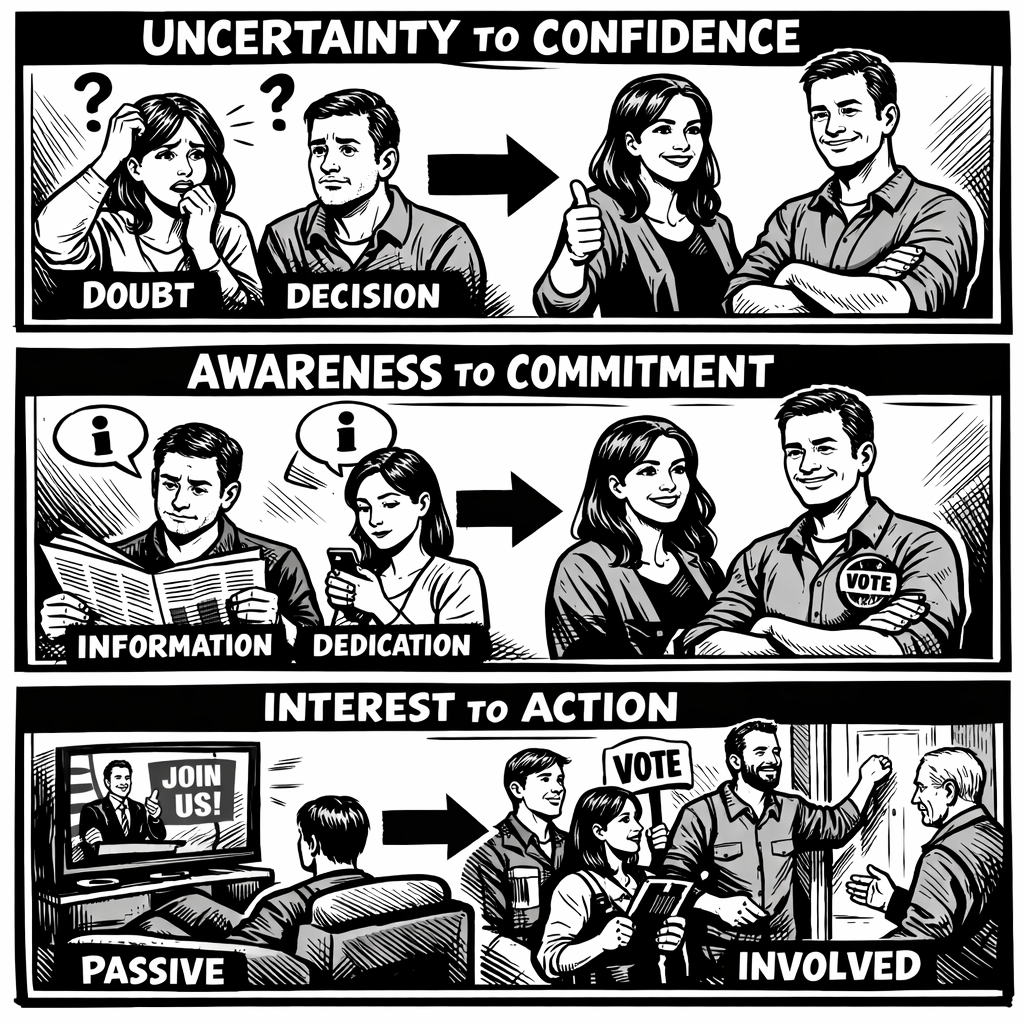
Understanding the Voter Journey
Imagine three supporters. A voter marked as a 3 likes you, agrees with many of your ideas, and may even enjoy meeting you, but is uncertain whether they will vote. A voter marked as a 2 expects to vote, but that commitment is not yet permanent. A voter marked as a 1 has fully embraced the change, has a voting plan, and often encourages others as well.
The goal of voter identification is to help people move through these stages.
What Change Management Teaches Campaigns
The same principle applies to voter turnout. As a candidate, your responsibility is not simply to identify where a voter stands today. Your responsibility is to help guide them through that change process.
Change management recognizes that people rarely change behavior immediately. People need:
- A reason for change
- A vision of the outcome
- Confidence in the process
- Reinforcement over time
Why Communication Matters
Researchers studying voter ID notifications found something surprising. Simply informing voters about identification requirements did not reduce turnout. In some cases, providing clear guidance and practical help actually increased turnout. The most effective communication was not simply a warning. It was a message that combined information with assistance. This is a valuable lesson for campaigns. People often need more than information. They need confidence, clarity, and support.
Moving a Voter from 3 to 2
A voter who likes the candidate but is uncertain about voting needs motivation. Campaign conversations should focus on why the election matters, community impact, personal relevance, and local consequences. This is the awareness stage. The voter begins seeing themselves as part of the solution. The goal is not persuasion. The goal is engagement.
Moving a Voter from 2 to 1
A voter who intends to vote still needs commitment. This stage focuses on reducing barriers. Campaigns should help voters answer practical questions: where is my polling location, what identification do I need, when can I vote, can I vote early, and how do I vote by mail. The research suggests that providing this type of practical support can increase participation. The campaign is helping voters move from intention to action.
Reinforcing the Change
Change management does not end when the plan is created. It requires continuous reinforcement. Campaigns should revisit supporters, provide updates, share successes, recruit volunteers, and invite participation. Every voter contact should move the voter one step closer to turnout.
How Winning Campaigns Apply This
Winning campaigns do not stop at identifying support. They build sequences that move uncertain supporters toward engagement, reinforce leaning supporters with practical help, and turn strong supporters into reliable voters and advocates.
How BRB Campaigns Supports This
BRB Campaigns helps teams organize voter identification, segment supporters by readiness, plan follow-up, and route each voter toward the next conversation or turnout action they need.
Related BRB workflow: Voter targeting, support segmentation, follow-up planning, and GOTV coordination
Key Takeaways
- Voter identification is most useful when campaigns treat it as a process of movement rather than a fixed score in a database.
- Supporters at different commitment levels need different kinds of communication, from motivation and relevance to practical voting support.
- Campaigns win when every voter contact answers the question of what that voter needs to move one step closer to voting.